

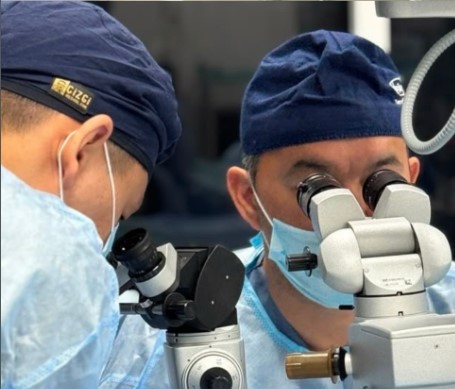
Nearly 1,500 residents of Shymkent have undergone complex ophthalmic surgeries since the beginning of the year as part of Kazakhstan’s Mandatory Social Health Insurance system. The high-tech medical care provided to patients with serious eye conditions, including cataracts, glaucoma and retinal detachment, has helped preserve their vision and prevent further deterioration.
One of the patients who benefited from medical care under the MSHI system is 60-year-old Shymkent resident Mukhidin Kaldybayev. He suffered a retinal detachment in his right eye, which resulted in complete loss of vision. With a serious risk of permanent blindness, the patient underwent a complex high-tech surgical procedure performed by ophthalmic surgeons at the Shymkent Clinic of the Kazakh Research Institute of Eye Diseases. Thanks to timely surgical treatment, doctors managed to preserve his vision.
Satisfied with the outcome of the treatment, the patient expressed his sincere gratitude to the medical team for their professionalism and assistance.
High-tech ophthalmic care available in Shymkent
The Shymkent Clinic of the Kazakh Research Institute of Eye Diseases is one of the leading medical institutions in the region providing high-tech ophthalmic care. The clinic performs approximately 2,500 complex eye surgeries every year, using modern diagnostic and surgical technologies.
According to Rustem Botabekov, Director of the Shymkent Clinic of the Kazakh Research Institute of Eye Diseases, retinal detachment is one of the most dangerous eye conditions requiring urgent medical intervention.
“Time is extremely important in cases of retinal detachment. If a patient seeks medical attention promptly and surgery is performed in a timely manner, the chances of preserving vision are significantly higher,” he said.
Specialists emphasize that sudden deterioration of vision, flashes of light, the appearance of numerous spots or “floaters” before the eyes, a shadow or “curtain” in the field of vision, or sudden loss of visual acuity should not be ignored. Such symptoms may indicate a serious eye condition and require urgent consultation with an ophthalmologist.
Five medical organizations provide ophthalmic services under MSHI
Currently, five medical organizations in Shymkent provide ophthalmic treatment services under the Mandatory Social Health Insurance system.
The availability of such services within the MSHI system allows residents to receive specialized and high-tech ophthalmic care without having to travel to other regions for complex surgical treatment when the necessary services are available locally.
According to Arapkul Izbassarova, Deputy Director of the Shymkent City Branch of the Social Health Insurance Fund, the MSHI system has contributed to greater access to complex ophthalmic care for residents.
“Thanks to the MSHI system, access to complex ophthalmic care has increased, and residents can undergo the necessary surgeries in their own city. Nearly 1,500 complex eye surgeries performed in Shymkent since the beginning of the year demonstrate both the demand for and the effectiveness of medical care in this area,” she said.
Early diagnosis is key to preserving vision
Eye diseases do not always cause noticeable symptoms at an early stage. Some conditions can progress gradually, while a patient may continue to feel relatively well. This is why regular eye examinations and timely medical consultations are important, particularly for people at increased risk of developing eye diseases.
Retinal detachment requires particular attention because delayed treatment can lead to irreversible vision loss. Patients should seek immediate medical attention if they experience sudden changes in vision or other alarming symptoms.
The experience of patients treated in Shymkent demonstrates the importance of combining modern medical technologies, qualified specialists and timely access to medical care. The development of high-tech ophthalmic services under the MSHI system gives residents greater opportunities to receive specialized treatment close to home and, most importantly, to protect one of their most important senses — their eyesight.