

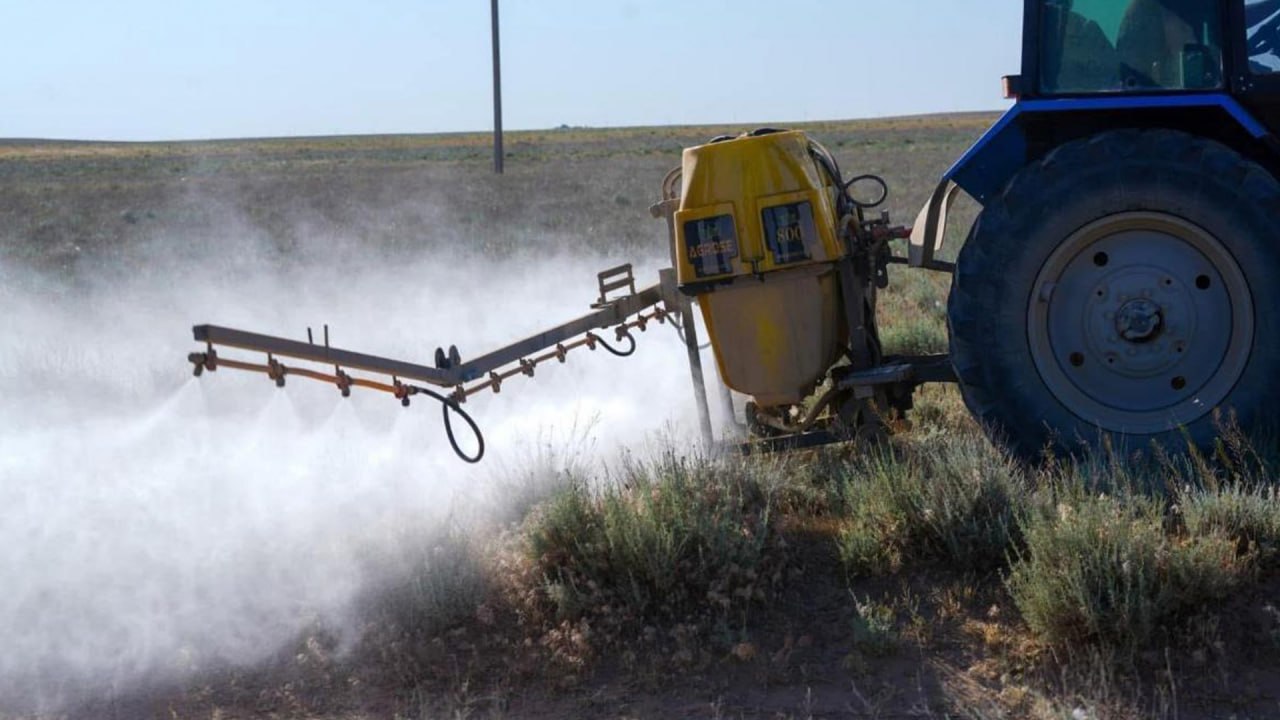
Kazakhstan has completed protective measures against locust pests as part of efforts to strengthen agricultural security, increase the efficiency of the agro-industrial sector, expand export potential, and ensure the country’s food security.
The Ministry of Agriculture of Kazakhstan continues systematic efforts to improve the national phytosanitary safety system. The main priorities include agricultural monitoring, the introduction of modern plant protection methods, and improving the effectiveness of state control in this area.
Chemical Treatment Area Reduced by 42%
Over the past two years, modernization of phytosanitary services, the introduction of advanced monitoring technologies, and improved organization of protection measures have helped reduce the area treated with chemicals against locust pests from 3.1 million to 1.8 million hectares, a reduction of 42%.
At the same time, damage to agricultural crops was prevented.
The results demonstrate a transition from responding to large-scale pest outbreaks toward a modern risk management system based on early detection of threats, rapid isolation of affected areas, and prevention of phytosanitary risks.
This year, chemical treatment was carried out on 1.8 million hectares within optimal periods and in accordance with agricultural requirements.
Digital Technologies Improve Pest Monitoring
One of the key areas of modernization is digital transformation. The Ministry of Agriculture has developed and launched the FITOCENTRE geoinformation system, which enables real-time monitoring of phytosanitary conditions, digital registration of survey results, tracking of pest outbreaks, and rapid decision-making.
The industry’s technical resources have also been significantly upgraded. A total of 103 unmanned aerial vehicles were purchased for monitoring and chemical treatment operations, including in hard-to-reach areas.
The number of spraying machines increased from 427 to 556 units, significantly improving the speed and efficiency of protective measures.
Lower Costs and More Effective Plant Protection
The reform of the plant protection system includes a transition to a unified comprehensive procurement model covering all stages — from the supply of plant protection products to chemical treatment operations.
This approach allows responsibility for the final result to be assigned to a specific contractor, improves the quality of protective measures, and ensures their timely implementation.
The implemented solutions have also produced significant economic results. In 2026, budget expenditures were reduced by 2 billion tenge, or 25% compared with 2024.
The Ministry of Agriculture stated that work to further strengthen phytosanitary security will continue. Currently, the phytosanitary situation in border areas remains stable, and no cases of locust migration have been recorded.
All necessary equipment has been concentrated in border regions and is ready for rapid deployment if required. The phytosanitary situation remains under continuous monitoring by specialists.